The Importance of a Sound Planned Giving Strategy

Fundraising is fundamental to the business models of many not-for-profit organizations. Attracting donors that connect with your organization’s work is critical to supporting your mission in perpetuity. But the not-for-profit space is large—there are many important and worthy organizations and causes for donors to consider. So how can not-for-profit organizations set themselves apart?
While ultimately it’s the donor’s choice to decide where they want to give their hard-earned assets, not-for-profit organizations can proactively take steps to provide donors with the best “planned giving” experience. Creating a transparent, engaging and impactful experience for donors can be a key differentiator in where donors choose to leave their gifts. Developing a comprehensive planned giving strategy will set not-for-profit organizations on the path to long-term financial success.
What Is Planned Giving?
Planned giving—also called “legacy giving,” “gift planning” or “deferred giving”—helps donors with their plans to give monetary or physical assets to not-for-profit organizations using a variety of planned giving vehicles.
While there are many vehicle options for donors, the most common are donor advised funds (DAFs), bequests, charitable gift annuities (CGAs), and charitable remainder trusts (CRTs). Not-for-profits strive to offer the vehicles best-suited for their donors, while also being mindful that the organization has to have the operational structure and capabilities to support the vehicles.
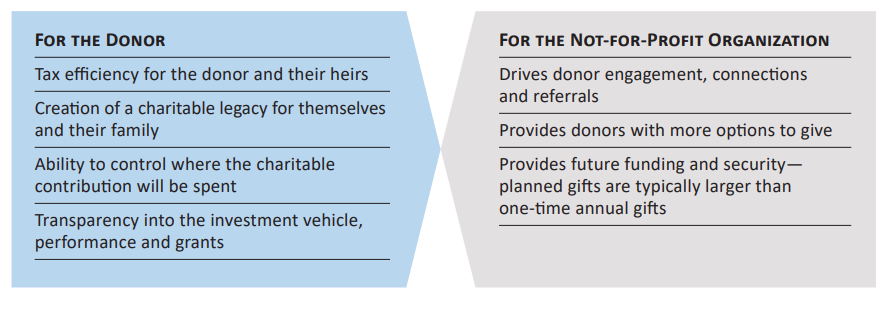
Having a comprehensive strategy for planned giving positions an organization to offer the donation options that resonate most with their donors. Each vehicle type offers the donor different advantages. In fact, many organizations have designated staff to help the donors and their families make the best decisions in terms of impact and tax considerations. There is also a growing desire for transparency
in the form of account access or reporting that shows the history of donations, vehicles and grants. In short, a not-for-profit organization needs to understand the planned giving services it believes will satisfy the needs of its donors.
Glossary
The world of planned giving has many acronyms and terms. On our website, we have a glossary of planned giving terms that you can access here.
Reciprocal Advantages of Planned Giving
Planned giving benefits both the donor and the not-for-profit organization with which they choose to partner:
For more information on planned giving vehicles, accounting rules, and broad trends in planned giving, check out these resources:
- American Council on Gift Annuities’ 2019 survey for best practices
- Resources from the National Associate of Charitable Gift Planners
In Summary
Planned giving is one way not-for-profit organizations can engage donors and provide a better long-term giving experience. Planned giving facilitates long-term relationships between donors and not-for-profit organizations by providing confidence to donors that their assets that will make long-lasting impact.